
Next

Accessible Touch-less Gaming
A customizable gaming control system for disabled groups
Individual Project
|
09.2019 - 04.2020
Project Brief
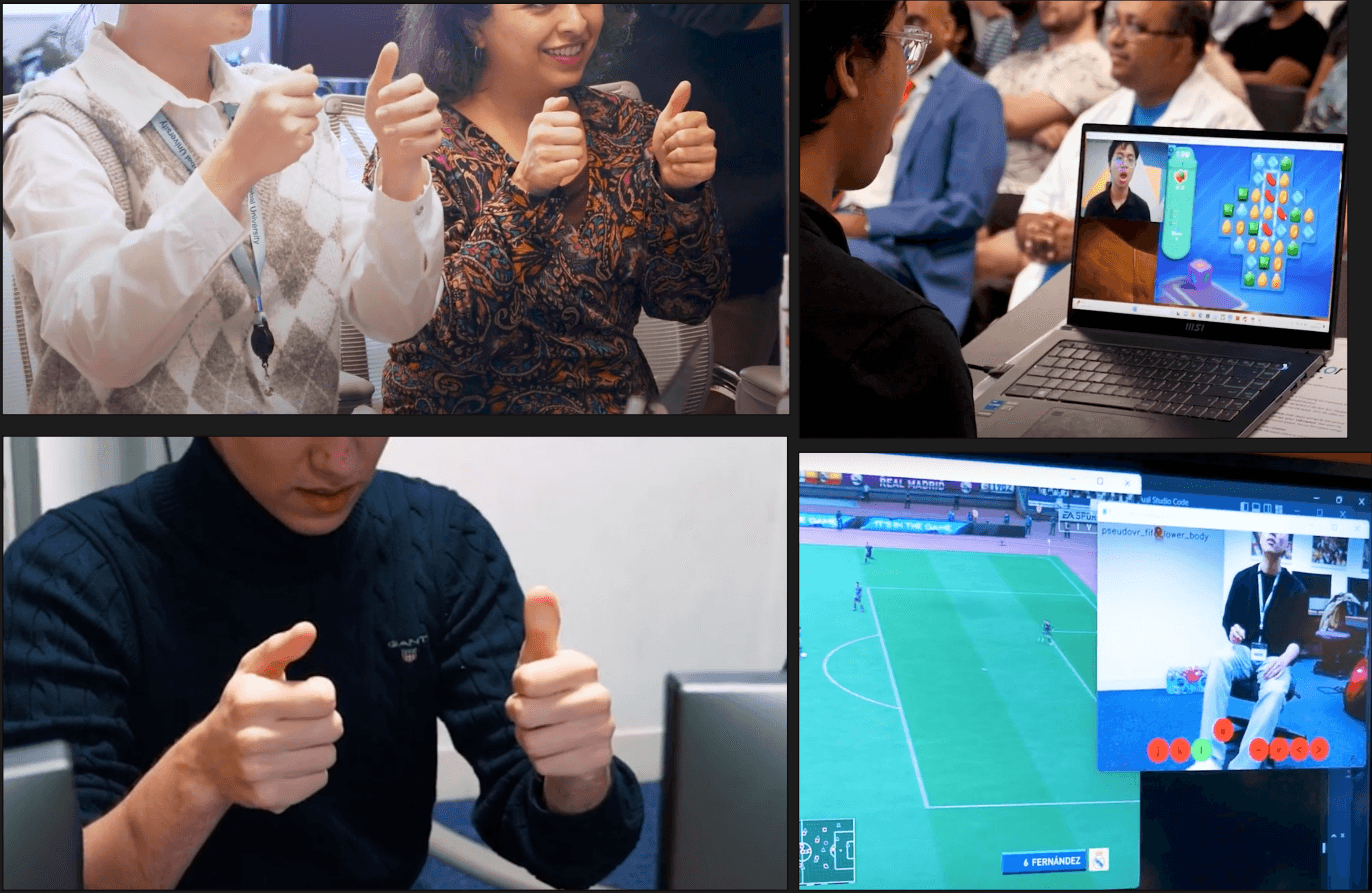
This project enhances gaming accessibility and equity by reimagining touch-less controls through computer vision interaction. It provides a software system that helps disabled groups, especially those with the upper-body limb loss, engage with normal PC gamings without using traditional physical keyboard or mouse.
To achieve this, I built on an existing touch-less control system named "MotionInput", and uses a single webcam to analyze user body moves in real-time and convert such signal into computer input. My improvements significantly enhances the capabilities of ”MotionInput“ by creating a software that provides personalized "control profiles" tailored to each user's unique body conditions.
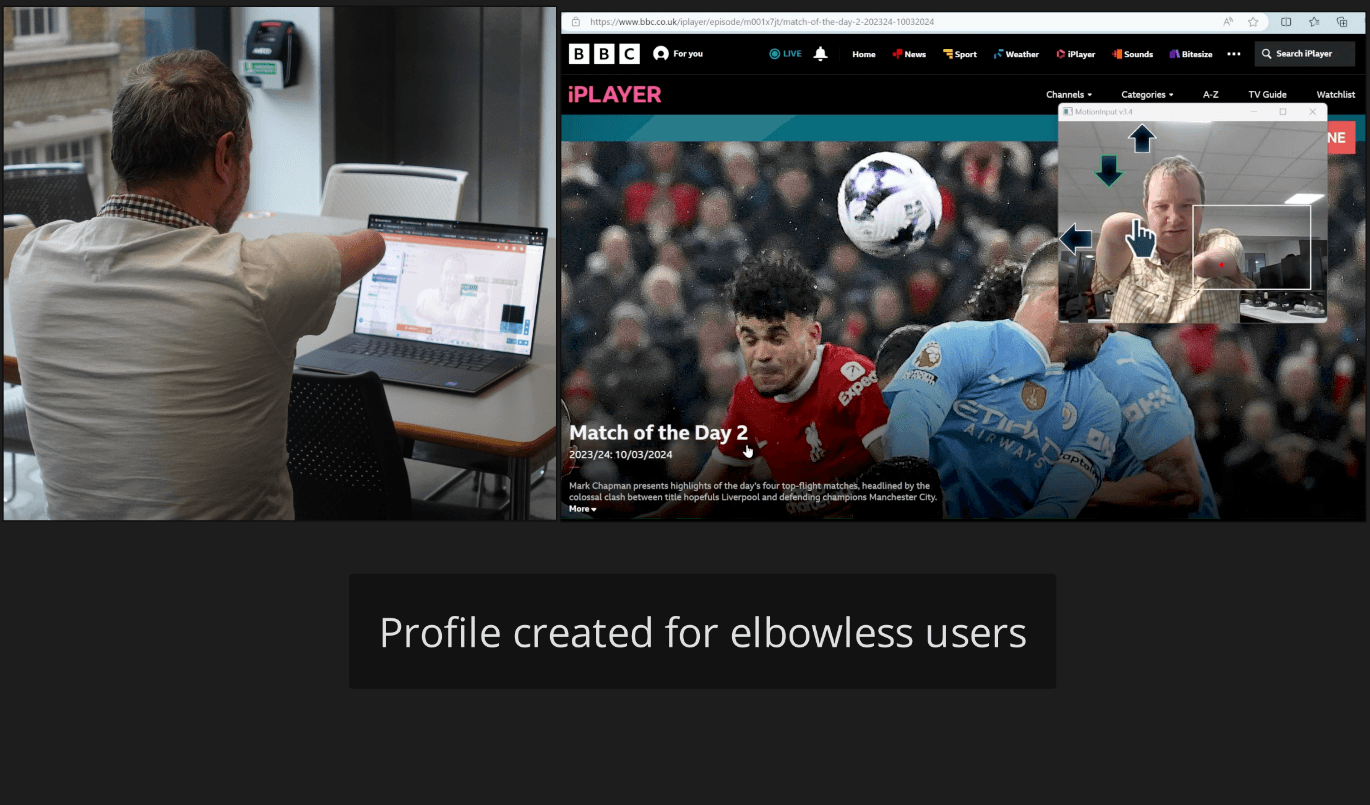
As the outcome, my system can, for instance, tailor a profile for a player without forearms, and leverages various touch-less methods allowing him to perform gameplay actions without any physical controller.
Project Info
Context: Undergraduate Individual Capstone Project
Category: Interactive Software System
Tools Used: Python, C#, Microsoft .NET, OpenCV, Google MediaPipe, Visual Studio, Figma, Adobe Creative Suite
Project Clients: BBC News, NHS
Project Supervisors:
Prof. Dean, Mohamedally - UCL CS Dept
Ms. Anelia, Gaydardzhieva - UCL CS Dept
Project Video
——— Project Development ———
Problem
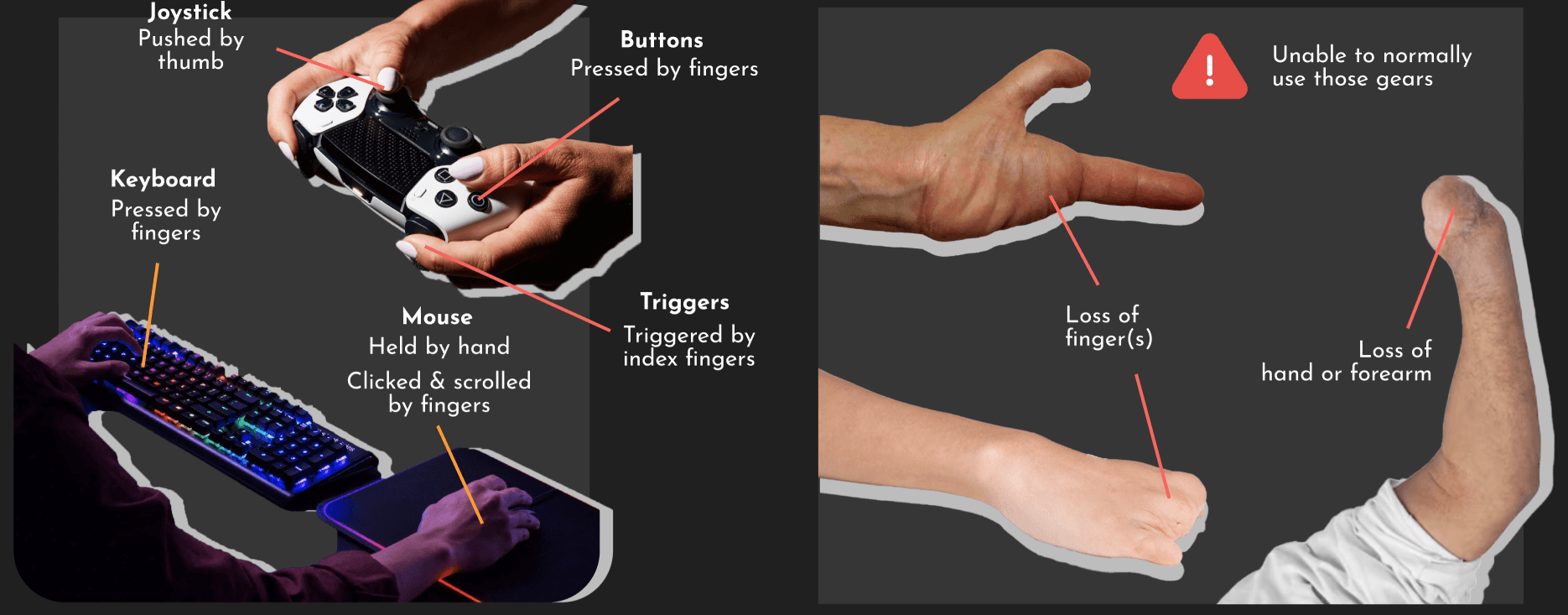
Traditional PC game control gears are only designed for fully-abled hands. However, such gears are not suitable to many people with limb loss or disabilities. Mainstream accessible controllers with big and customizable joysticks and buttons offer benefits but also have inconveniences like bulky in size, and having certain costs.
Concept
Founded by the UCL CS Engineering in 2020, the MotionInput is a touch-less control platform founded to address accessibility needs. It uses a webcam to detect user body moves or hand shapes and convert into computer inputs.
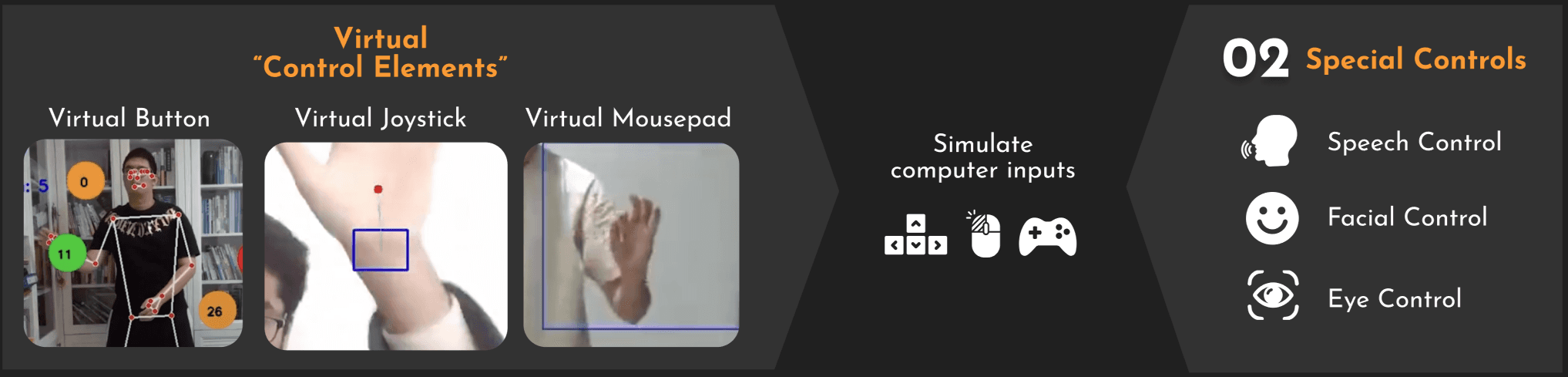
MotionInput features a wide range of basic control tools like the virtual joystick, virtual mousepad, facial control, and speech control, all designed for users with different needs. This project aguments the MotionInput by adding innovative control options and developing a process that integrates all the existing control tools to maximize the flexibility and accessibility of MotionInput for more disabled users' gaming needs.
The Challenge
I conducted several field studies in London local hospitals and children schools, and interviewed several users for their specific accessible gaming issues.
Users require more adaptable control elements tailored to their specific gaming needs, which can vary across different games. Additionally, they need a simple, intuitive process to customize controls to their unique physical conditions—some may lack hands, have limited finger dexterity, or unable to speak. Addressing this challenge demands ergonomic studies of the human body and the development of a novel workflow to meet these diverse requirements.
Process of Design & Implementation
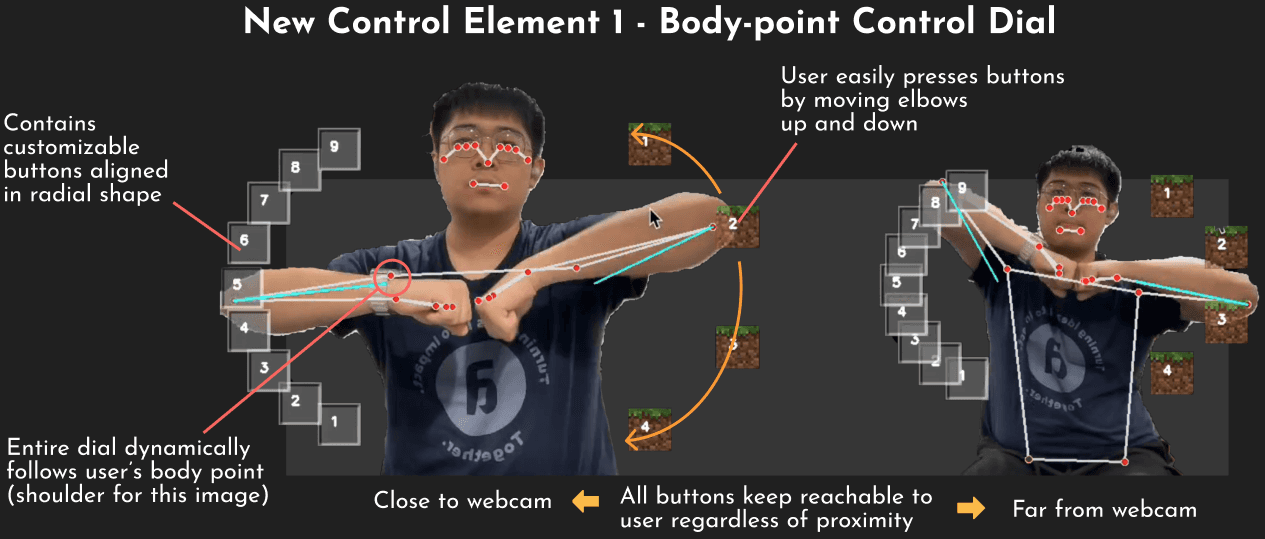
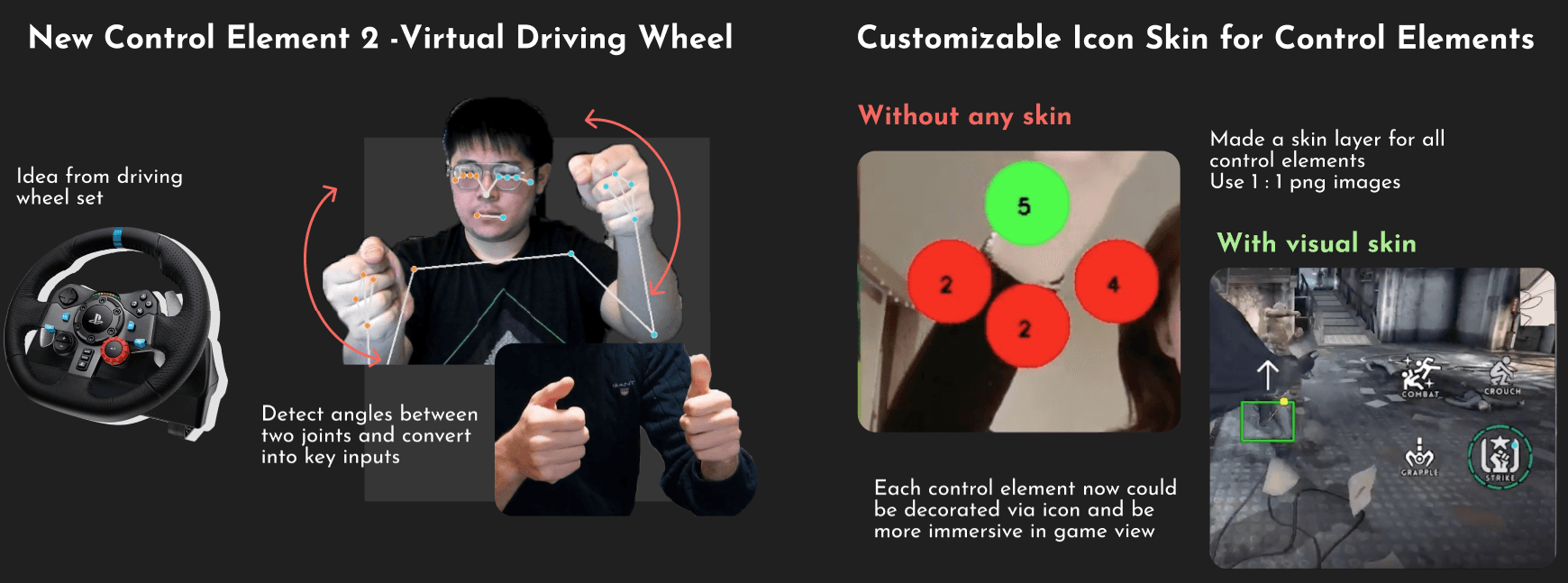
I firstly designed several new features that enhances the functionality of Motioninput, and handles more accessible game controls for users without forearms.
Application for Tailored Control Profiles
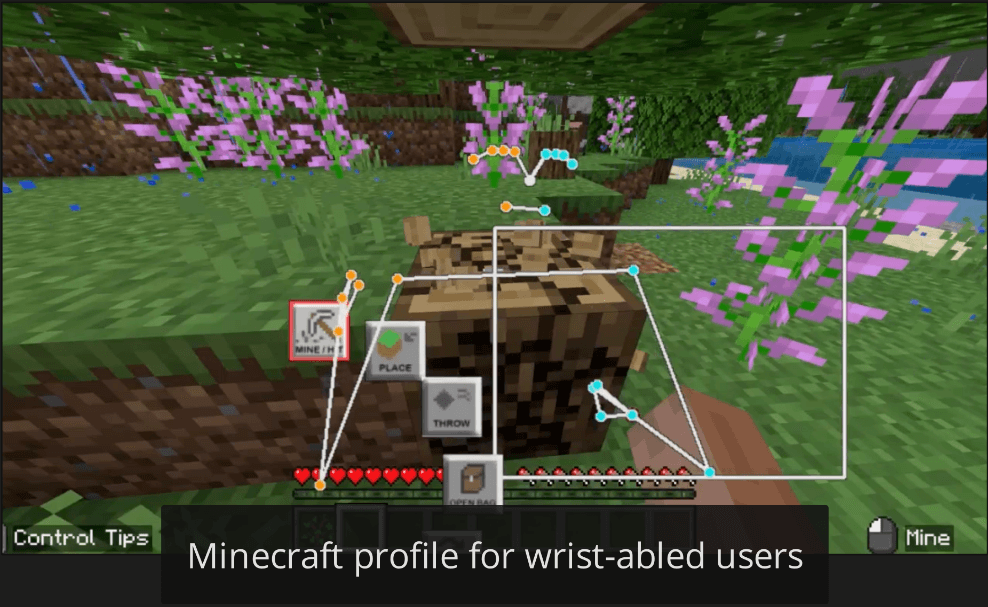
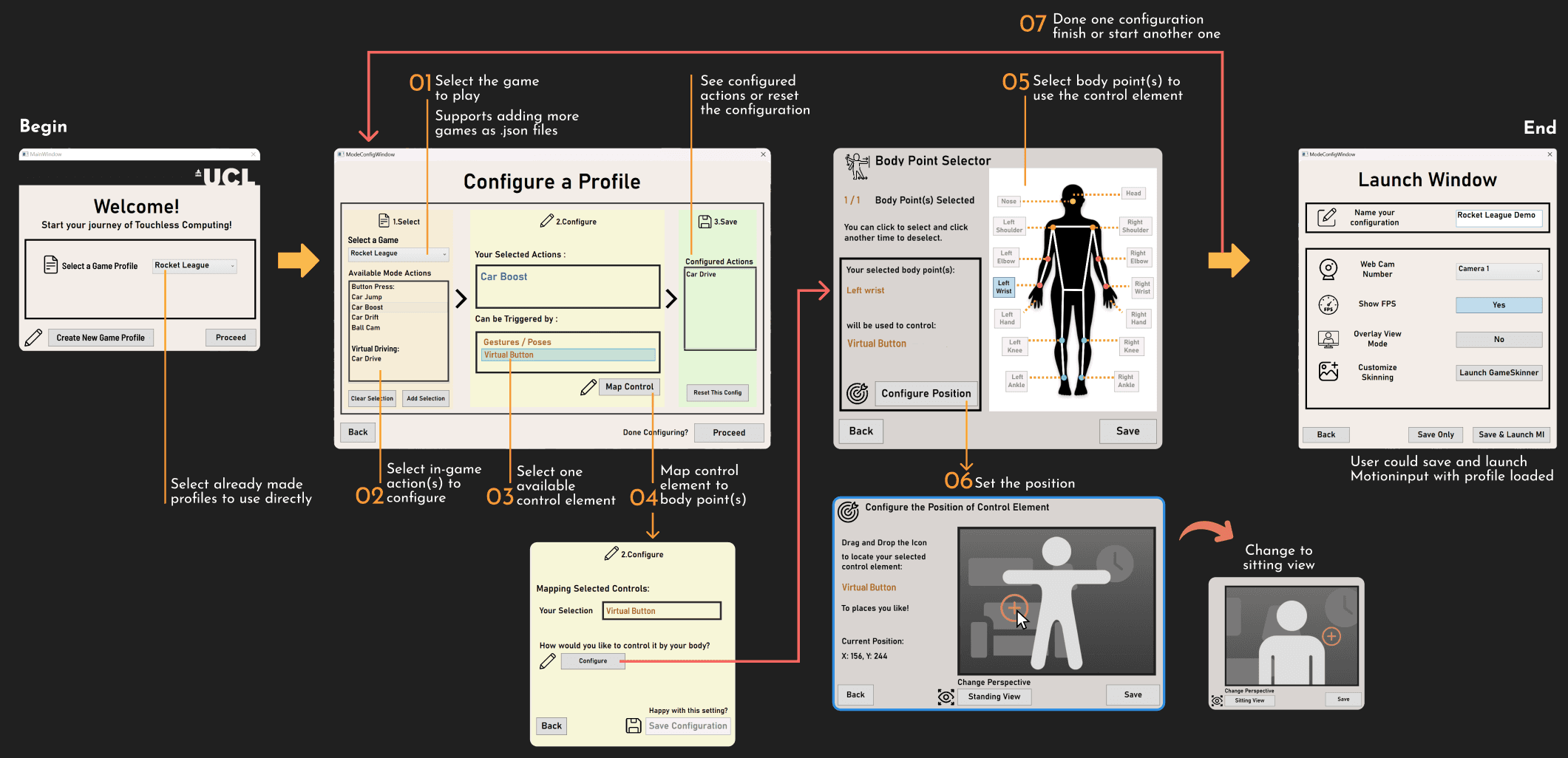
Utilizing the Microsoft .NET GUI framework, I created a universal app that harnesses MotionInput control elements and new ones I designed to create custom profiles. The profile creation process starts with the user selecting the game they want to play. They then choose dedicated control elements based on their physical abilities. For example, users can bind actions to body parts they can use, like using elbows, wrists, or even facial expressions. The app saves this configuration in a profile format for MotionInput, ensuring that different users can play the same game equitably, with each control tailored for their unique condition.
Outcome
Making an Armless Man Play PC Games
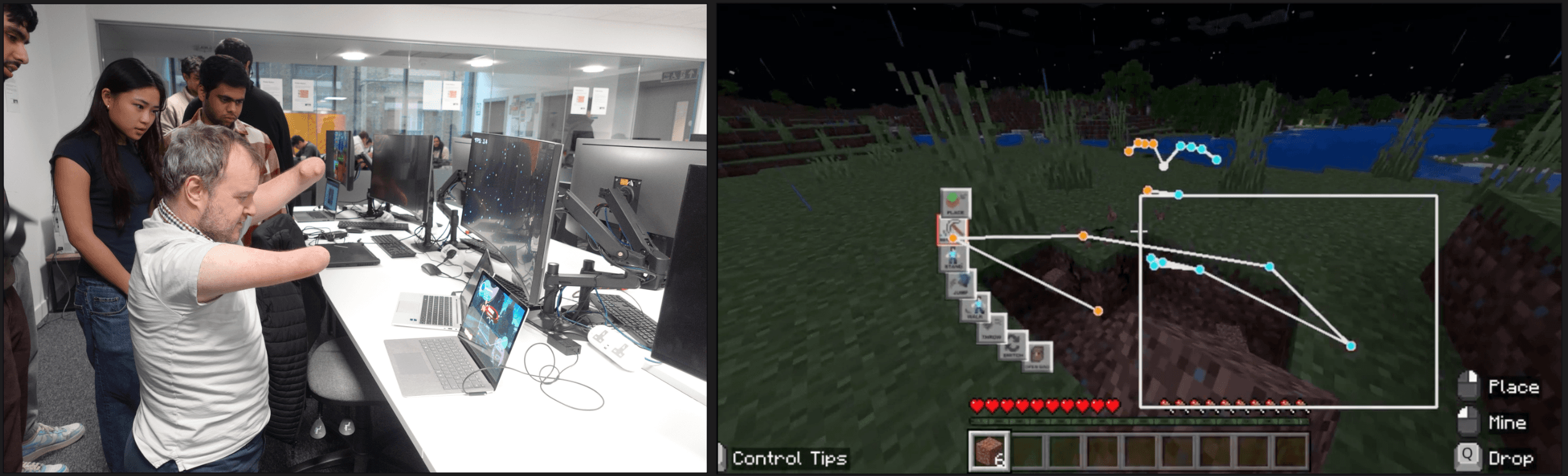
I was honored to have Paul Carter, a journalist from BBC News with limb disabilities, participate as a tester. Mr. Paul, who lacks forearms and lower legs, tested a series of tailored profiles including a control dial configured with few virtual buttons designed for PC gameplay like Minecraft.
Accessible Gaming Experience for School Children
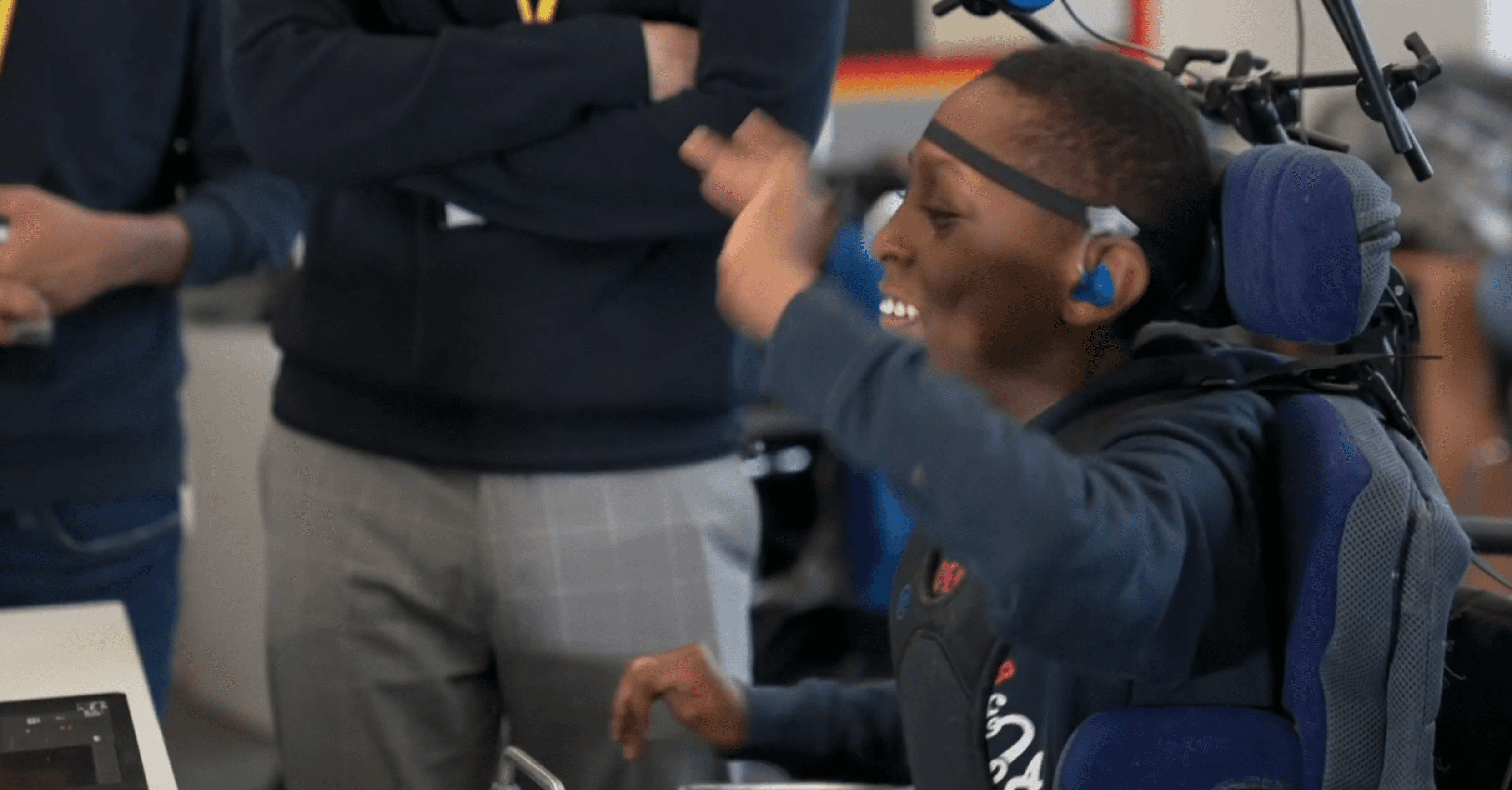
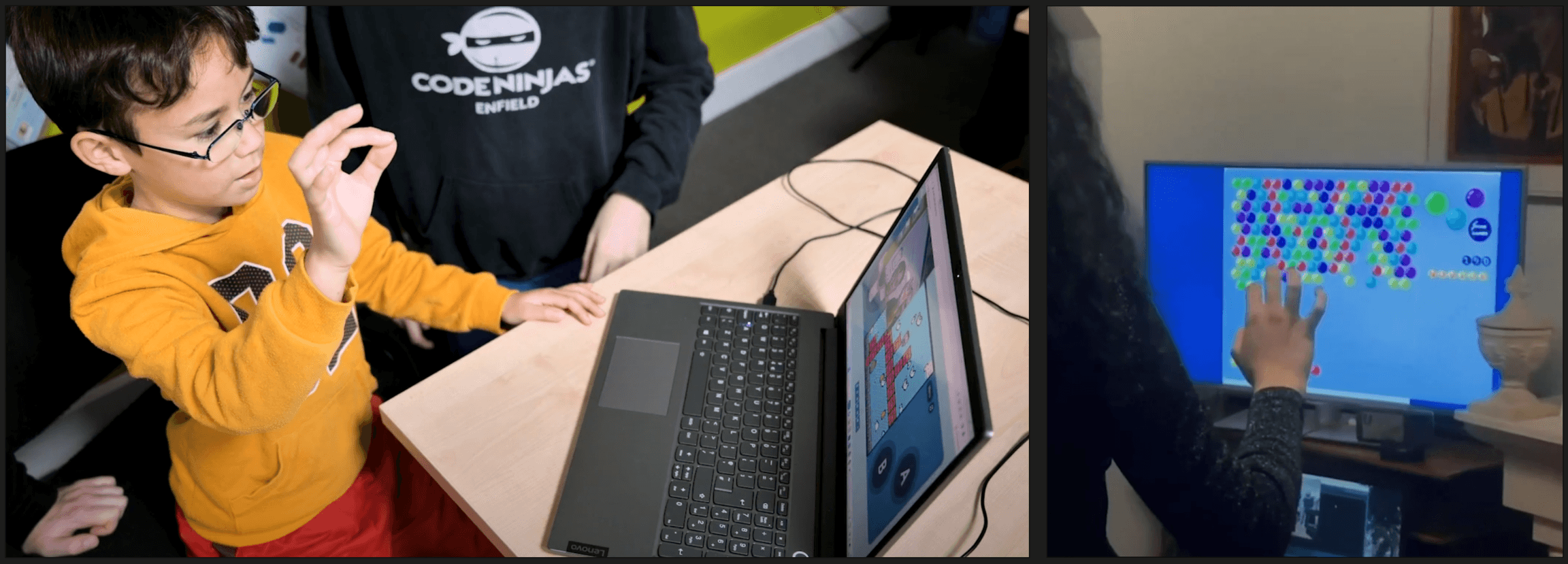
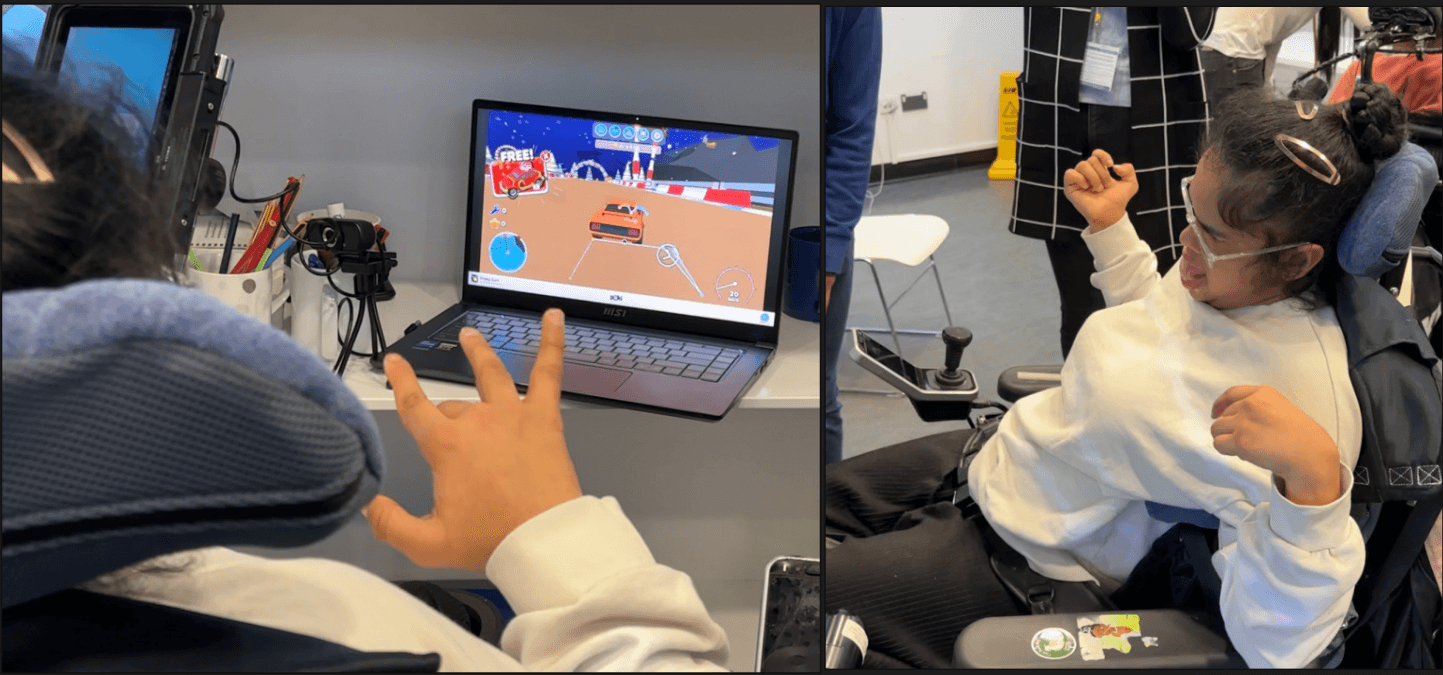
During the official visits to London Richard Cloudesley School, known for educating pupils with physical disabilities and additional sensory needs, I participated in several scheduled user testing sessions. Leveraging my software, I created tailored profiles for school children with Cerebral Palsy illness, to play simple racing games and puzzles with hand wrists only.
Immersive Locomotion Gamings
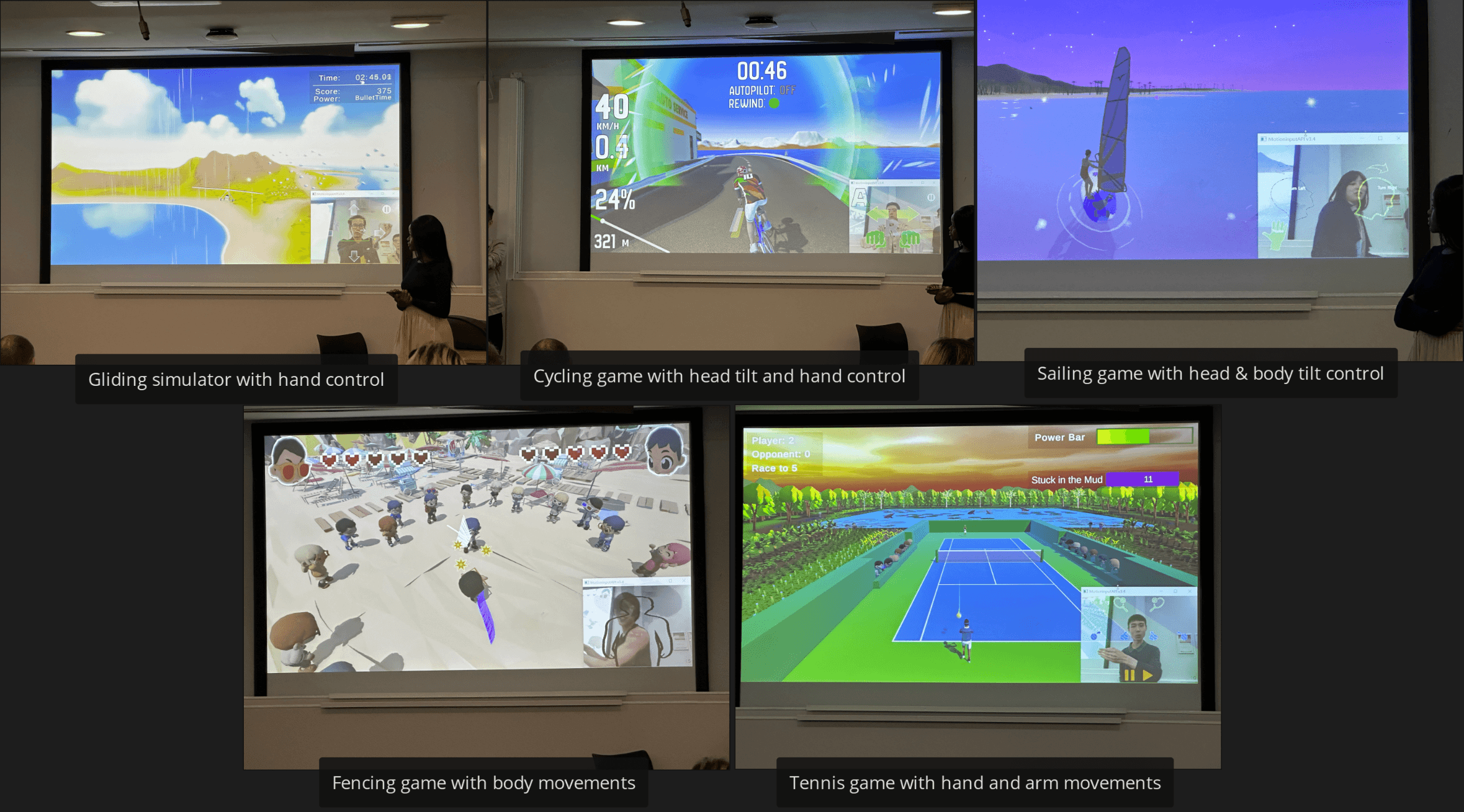
My application implementation was comprehensively used by other developers for MotionInput to create locomotive gaming experiences for their games, each game featured a novel and fun way to play via the general customization feature from my work.